
Water, Chemicals and the Costs You Can't See on the Invoice
You wouldn't buy a product without knowing what it's made from. So why do so many brands cost a product without knowing what went into making it?
You've just landed in sunny Spain. It's hot. You're thirsty. So you grab a bottle of water. Then another. Then another. Before you know it, you've gone through a dozen bottles in a few days - and you're just one person.
Now imagine that thirst scaled up to producing a pair of jeans. A single pair of denim jeans requires approximately 3,800 litres of water throughout its lifecycle - from growing the cotton to the dyeing, stonewashing and finishing processes. A cotton T-shirt? Around 2,700 litres. In major sourcing regions across South Asia and Central Asia, that water isn't coming from an unlimited supply. It's coming from increasingly stressed river systems and aquifers - and the cost of accessing it is rising.
Water risk is now a financial risk. The Taskforce on Nature-related Financial Disclosures (TNFD) classifies water dependency as a material issue for businesses with nature-intensive supply chains. In fashion, that's nearly everyone working with natural fibres. Factories in water-scarce regions already face higher input costs and production risk. That risk belongs somewhere in your cost price - especially for denim, cotton, and wet-process-heavy categories.
The water embedded in your product isn't free. It just hasn't been invoiced to you - yet.
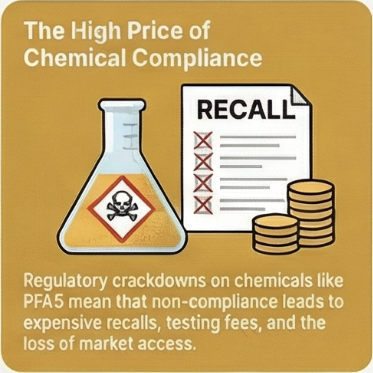
Then there are the chemicals. Fashion production runs on dyes, fixatives, bleaching agents, flame retardants and performance coatings. Many of these are under serious regulatory scrutiny. PFAS - the chemicals widely used in water-resistant outerwear - are being phased out across the EU and UK. Reformulating is expensive. A product that fails a chemical compliance check at import isn't just a fine. It's a recall, a reputational hit, and potentially a permanent loss of market access.
Cascale's climate work flags nature-positive supply chains as a growing prerequisite for both investors and regulators - not just a nice to have. Fairly Made's 2026 framework echoes this: knowing what goes into your product at the input level is now foundational, not optional.
Neither water nor chemicals typically appear on a cost sheet. They should. A water risk premium for water-intensive categories, and a chemical compliance provision for regulated product types, are practical additions that any buying team can start building today.
That all sounds hard right? That’s why we created………
THE IMPACT MARGIN CALCULATOR
Water intensity and chemical compliance are two of the trickier costs to quantify - which is exactly why we built them into the Impact Margin Calculator. For categories like denim, cotton jersey, or performance outerwear, the calculator applies a water risk premium based on production method and sourcing geography, alongside a chemical compliance cost that accounts for testing, certification, and the growing cost of reformulation. It gives BMD teams visibility over risks that have always existed - they just haven't been visible at the point of purchase.
Sourcing water-intensive or chemically complex products?
See how the calculator handles it
Book a free demo ourfashionfix.com/contact