
Your Carbon Isn't Just a Report. It's a Bill.
Fashion brands are getting good at measuring their carbon. Far fewer are pricing it. That gap is about to become very expensive.
Here's a question worth sitting with. Your brand probably measures its Scope 3 emissions. Maybe you have a net zero target. You've possibly commissioned a lifecycle assessment or two. But when a buyer sits down to cost a product - does any of that carbon data appear on the spreadsheet?
For most brands, the honest answer is no. Carbon gets measured, reported, discussed in sustainability meetings, and then... it lives in a PDF. What it rarely does is translate into an actual cost line in the product's financial model.
That disconnect is getting dangerous. The Apparel Impact Institute's "Cost of Inaction" report puts it plainly: CFOs need to be leading sustainability investment as a margin protection strategy - because carbon taxes, EU border adjustment mechanisms, and supplier-level levies are already in motion. The carbon intensity of how a garment is made is becoming a cost of importing it.
A product made in a coal-powered facility in a country facing carbon border taxes will cost more to import than one made with renewable energy. If your cost price doesn't reflect that today, it will shock your margin tomorrow.
Cascale's latest climate analysis makes this even harder to ignore. Fashion's emissions are still rising - not falling. The industry is off-track on its own targets, which means external carbon pricing applied by governments and regulators, rather than brands themselves, is now the more likely outcome. Waiting for the supply chain to sort itself out is not a plan.
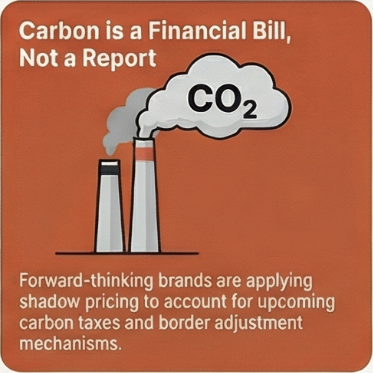
The practical step here is called a shadow carbon price. You take the CO2e per unit (using supplier data, benchmarks or lifecycle tools), multiply it by a shadow carbon price - the UK currently uses a range of £50–£200 per tonne for policy planning - and you add it to the cost price. You review it each year as the regulatory floor moves.
It's not complicated. It's just never been done. Fairly Made's 2026 e-book talks about sustainability becoming the operating foundation of fashion businesses - and this is exactly what that looks like in practice. Carbon on the cost sheet. Real numbers. Real decisions.
THE IMPACT MARGIN CALCULATOR
This is the gap the Impact Margin Calculator was built to close. Rather than leaving carbon as a number that lives in a sustainability report and never touches a buying decision, the calculator translates CO2e per unit into an actual cost line - using a shadow carbon price that can be updated as the regulatory landscape shifts. For the first time, BMD teams can see how the carbon intensity of one supplier's production compares to another's, in financial terms, before committing to a purchase.
Want to see carbon costed into your products in real time?
Book your free demo ourfashionfix.com/contact