
Is Your Buying Model Living in the Past?
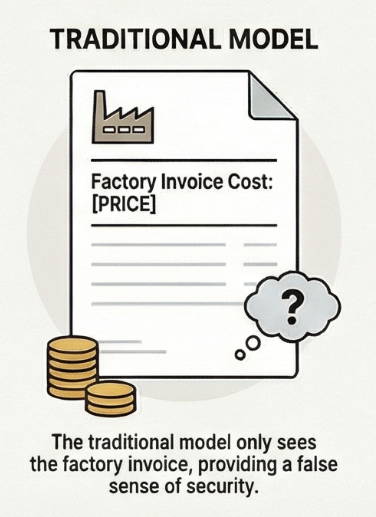
Traditional buying-in margin was designed for a world that no longer exists. Continuing to use it isn't playing it safe. It's taking on risk you just can't see yet.
Cast your mind back to how buying worked a generation ago ( I may have been the buyer!). You found a factory, negotiated a price, applied your margin, set a retail price, and moved on. The only costs that counted were the ones on the invoice. The only risk was commercial risk. And the only people you needed to satisfy were the finance director and the buying director.
That world still exists - in the model. The trouble is, the world outside the model has changed completely. It isn’t until you step outside of the world that you truely see this.
Carbon taxes are being introduced. Packaging levies are being enforced. Import regulations are tightening around chemical compliance. The EU has made Extended Producer Responsibility for textiles mandatory across member states. And the Apparel Impact Institute has put a number on what continuing as normal will cost: a 34% drop in profits by 2030 for brands that don't accelerate supply chain decarbonisation.
A margin model that can't see EPR costs, carbon risk, water intensity, chemical compliance or pre-loved value isn't giving you a margin. It's giving you a half the story - and a false sense of security.
Cascale's latest climate data makes the structural problem impossible to ignore. Fashion's emissions are still rising. The industry is falling short of its own 2030 targets. That means the gap between what it actually costs to make clothes - in full, including environmental impact - and what brands currently price into products is not closing. Regulators are closing it from the other side, through mandatory costs that currently live nowhere in most commercial models.
Fairly Made identifies this as the central operational challenge for fashion businesses right now: moving from sustainability as a bolt-on function to sustainability as the foundation. And a cost price is part of that foundation. If it can't see the true cost of the product, it can't support the decisions you need to make a business that lasts. Don’t be surprised when your profit number is substantially lower than you ‘thought’ it would be.
The traditional buying-in margin model isn't wrong in what it includes. It's wrong in what it leaves out. And in 2026, what it leaves out is no longer a rounding error. It's the difference between seeing risk coming - and being flattened by it.
But at Our Fashion Fix we like to keep things simple so we created ……
THE IMPACT MARGIN CALCULATOR
The Impact Margin Calculator created with our partners at Brand Conscience exists because we got tired of watching brilliant buying teams make decisions with incomplete information ( we literally lives this ). It's not a replacement for the commercial model - it's an upgrade. Built specifically for BMD teams, it sits alongside the existing cost price process and adds what's currently missing: EPR, carbon, water, toxicity and pre-loved value, all calculated at product level, before purchase is committed - because we want to make profitable changes now not just in the future. It's what buying-in margin looks like when it's fit for the world we're actually operating in.
Ready to see what your buying model looks like with the full picture?
Book your free demo ourfashionfix.com/contact