
Win Win for the Fashion Industry
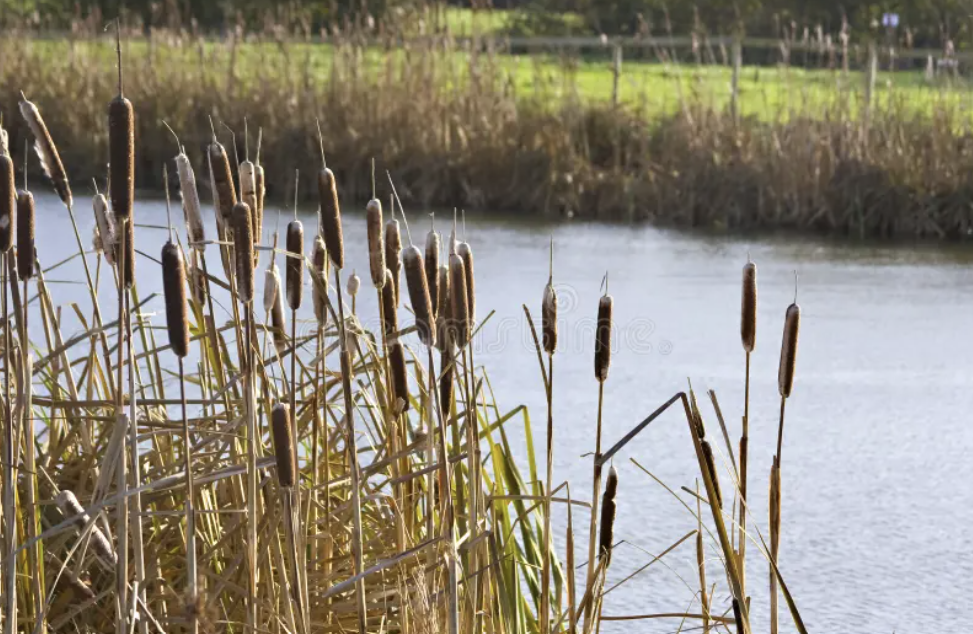
Bullrushes image from Dreamstime.com
Flooding Is Coming.
Here Are Two Things The Fashion Industry Could Actually Do About It
We've had the driest July in 190 years, four heatwaves, and a drought covering most of England and Wales. Now the Met Office is warning of one of the strongest El Niño events in over a century, with an autumn that's set to be wet, stormy, and prone to flooding. This is what a warming climate does: bake everything dry for months, then hit it with heavy rain it can't absorb.
There are two ways to actually respond to that. One is about protecting what we already have: our stores, our warehouses, our people. The other is about what we're putting into our products in the first place. Luckily there is a solution, they both start with the same thing: wetlands.
Option one: protect the infrastructure
Sainsbury's already learned this the hard way. In 2015, Storm Desmond flooded several of its stores. Weeks of closures, millions in lost stock and revenue, and a very clear message that waiting for the water to arrive and cleaning up after is not a strategy.
So Sainsbury's partnered with a resilience platform called SmartResilience I was lucky to hear about this project in person at a recent Cambridge Institute for Sustainable Leadership event and together they built a proper early warning system across Sainsbury’s estate. Every site got mapped against historical flood data so the high risk stores and warehouses were flagged in advance. From there, the system pulls in real time river level monitoring, weather tracking, and official Environment Agency warnings, all on one dashboard. When risk starts building, the alerts go straight to store teams by text and email, in time to actually do something about it.
It worked. When Storm Eunice hit in 2022, the system flagged a flood risk at Sainsbury's Tadcaster store 12 hours before it happened, seven hours before the official Environment Agency warning even landed. Staff had time to get flood defences in place. The result was 5cm of water instead of a written off store, virtually no stock loss, and the doors open again the next afternoon. The whole system took a week to set up.
Then there's the older, quieter defence: wetlands. There's a great watch on this called A Solution To Floods Everyone's Been Ignoring, and the argument is a good one. We've spent billions on flood defences that mostly just move water somewhere else faster, while draining and building over the wetlands, floodplains and marshland that used to soak it up in the first place. Wetlands act like a sponge, holding onto rainwater and releasing it slowly instead of sending it straight into rivers and drains that are already struggling. Roughly half of the UK's wetlands have been lost to farming and development, which is exactly the natural flood buffer we could really do with right now. Restoring them isn't a quick fix, but it's a far cheaper, longer term one than concrete alone.
Between these two options they offer both long term and short term solutions to mitigate risk- know where the risk is, monitor it in real time, and give the land somewhere to put the water long term.
Option two: put wetlands into the supply chain itself
This is where as an ex-outerwear buyer I get excited. Wetland restoration doesn't just hold back water. It can grow the next generation of insulation for our jackets.
Bulrush, also known as cattail or typha, has fluffy seed heads that expand to around 300 times their dried size. Their fine, fibre clusters trap air almost exactly the way goose or duck down does, giving that same lofty, warm feel without animal by-products A UK biomaterials company called Ponda has turned this into a real, commercial fill called BioPuff, grown through paludiculture, which is essentially wet farming on rewetted peatland instead of drained land. That matters because drained peat releases huge amounts of carbon, while rewetted peat locks it back in. Ponda has already worked with brands including Stella McCartney, and a government backed trial site in Greater Manchester has bulrush growing at scale, using land that was drained for farming over 50 years ago and is now being flooded again on purpose.
Which means the same wetlands doing the flood defence work in option one are also, in this version, growing a genuinely usable, animal free, lower carbon fill for padded jackets. Restore the land, hold back the water, and grow the fibre that ends up in the coat in your wardrobe. That's about as close to a win win as this industry gets.
What we're actually doing about it
A wetter, stormier autumn isn't a hypothetical anymore. It's forecast, and it touches stores, warehouses, distribution centres, the people working in them, and the materials we're putting into our products.
For infrastructure, that means doing what Sainsbury's did: know which sites actually sit in flood risk zones, invest in real time monitoring rather than waiting on an official warning, and have flood defences ready to go rather than sourced in a panic once the water's already at the door.
For our teams, it means clear plans that put people ahead of stock. Knowing who needs to be where, how staff get home safely if a site floods, and making sure nobody finds out about a flood risk from the news before they hear it from us.
For our supply chain, it means looking seriously at materials like BioPuff, not as a nice to have, but as a way of putting money into wetland restoration that pays us back twice: less flood risk, and a fill that doesn't rely on animal down or fossil fuel derived synthetics.
Early warning systems buy us time. Restored wetlands buy us protection and a better product. Neither one solves the actual root of the problem on its own, which is a warming climate driving more frequent, more extreme weather. That part still comes down to genuinely reducing the emissions our industry produces, across supply chains, logistics, and how much we're making and shipping. But it's rare to find two solutions that work on the flood problem and the product problem at the same time, so it's worth paying attention to this one.
Want to know more on systems thinking? Stop doing the same BAU and expecting different results. Want to know what your business can do to reduce it impact? Talk to us about our Ask Miranda® Platform.
Contact @jo.ward@ourfashionfix.co.uk / Jo.Ingham@ourfashionfix.co.uk
Contact | Reach Out Today — Our Fashion Fix