
Does Training Add Value to Your Business?
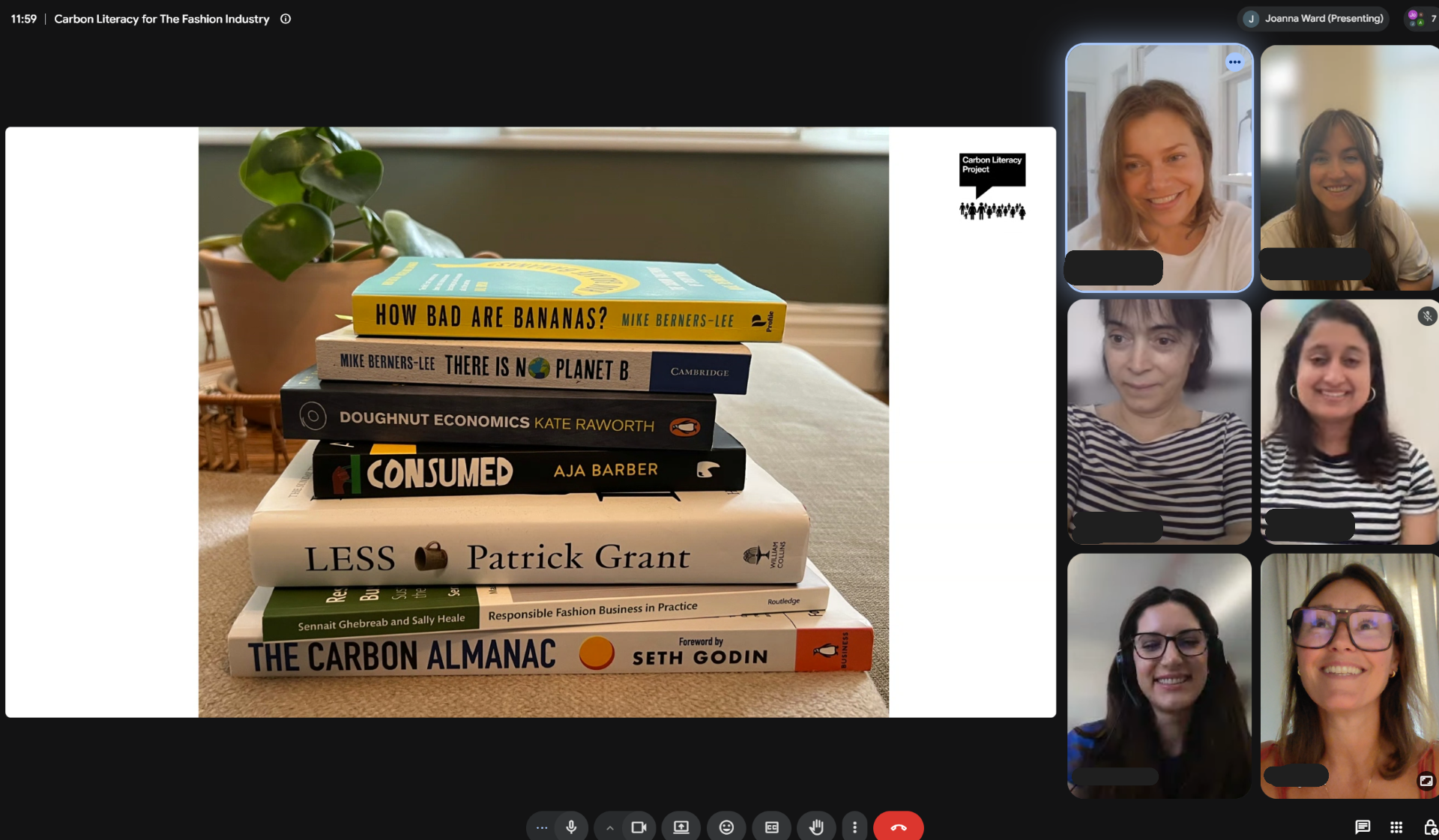
One of our online cohorts for Carbon Literacy for the Fashion Industry
Our Feedback and ROI says absolutely and it’s a lot cheaper than you may think…….
Retail is under more climate pressure than almost any other sector. Fast-moving supply chains, high energy use across stores and warehouses, growing regulatory reporting requirements, and increasingly climate-savvy customers all mean that "we'll deal with this later" is no longer an option if you want to stay relevant. The good news for retailers weighing up whether to invest in training: carbon literacy for your team isn't just good business sense, the cost is also fully offset against your business profits as a legitimate, tax-deductible expense.
That doesn't mean the invoice wont come, but it does mean the true cost to your business is lower than the price may suggest, because the spend reduces the profit you pay corporation tax on. For many businesses, that turns a training budget into one of the easiest, lowest-friction investments you can make in your team this year.
Under UK tax rules, training costs for genuine employees are almost always deductible against business profits. HMRC's own guidance treats disallowing staff training as the exception, not the rule, the only real requirement is that the spend is incurred wholly and exclusively for the purposes of the business. Crucially, HMRC looks at the purpose of the training, not whether you can prove a specific measurable outcome afterwards. And the fact that your team might genuinely enjoy or find the course personally rewarding doesn't disqualify it either.( Our courses are genuinely engaging and enjoyable!)
For retailers and brands, carbon literacy training easily passes this criteria. It's not a random personal development perk it directly supports:
- Regulatory compliance -Streamlined Energy and Carbon Reporting (SECR), and for larger or supply-chain-linked businesses, incoming frameworks like CSRD and Green Claims requirements
- Supply chain risk management identifying carbon hotspots and vulnerabilities before they become costly problems
- Commercial positioning - genuine, well-evidenced sustainability credentials are now a competitive differentiator.
- Operational efficiency energy and resource use directly affect your bottom line
This makes it easy to demonstrate the necessary business purpose, whether the training is for store teams, operations staff, or head office functions like buying, merchandising, and marketing.
There's added upside for employees too: work-related training funded by the employer is normally tax-free for them as a benefit, so nobody ends up with an unexpected tax bill for taking part.
Why this matters right now for head office AND store teams.
Climate literacy in retail can't sit only with a sustainability team of one or two people. The pressure points show up everywhere in the business and we should all be accountable to deliver company targets for ESG.
Head office teams - buying, merchandising, marketing, and finance, are the ones making decisions that determine a retailer's actual carbon footprint: what's sourced, how it's shipped, what claims go into marketing copy, and how the business reports its impact to investors, regulators, and increasingly demanding B2B customers ( marketplace). Getting this wrong isn't just an environmental issue anymore greenwashing claims and reporting gaps carry real reputational and regulatory risk.
Store teams are the face of the brand. Customers are asking more questions about where products come from and what a retailer is actually doing about its impact. Staff who understand the basics of carbon and climate can speak to this with genuine confidence, rather than falling back on vague, unsubstantiated claims that can damage trust or worse, breach advertising and consumer protection rules.
Training both groups together also closes a gap that trips up a lot of retailers: head office sets ambitious targets, but if store teams don't understand why those targets exist or how their day-to-day work connects to them, action is stalled and targets are missed. Carbon literacy gives everyone, from the shop floor to the boardroom a shared, practical vocabulary and the confidence to turn climate risk into a genuine competitive advantage.
How
Our Fashion Fix runs Carbon Literacy Project–certified training designed specifically for retail and fashion businesses, delivered in two half-day sessions covering the climate context relevant to your sector and the practical actions your team can take from day one. Participants leave with two role-specific, high-impact action plans- pledges not just a certificate.
- Carbon Literacy for SMEs next cohort 16–17 September, £140 per person (discounts available for multiple tickets)
- Carbon Literacy for the Fashion Industry next cohort 15–16 September 2026, from £175 per person
Both courses are delivered as interactive online workshops, with in-person delivery available on request.
To enquire or book a place for your team, contact jo.ward@ourfashionfix.co.uk or visit ourfashionfix.com.
(This is general guidance, not personalised tax advice, always worth a quick check with your accountant on the specifics of your business.)