
International Women’s Day 2026
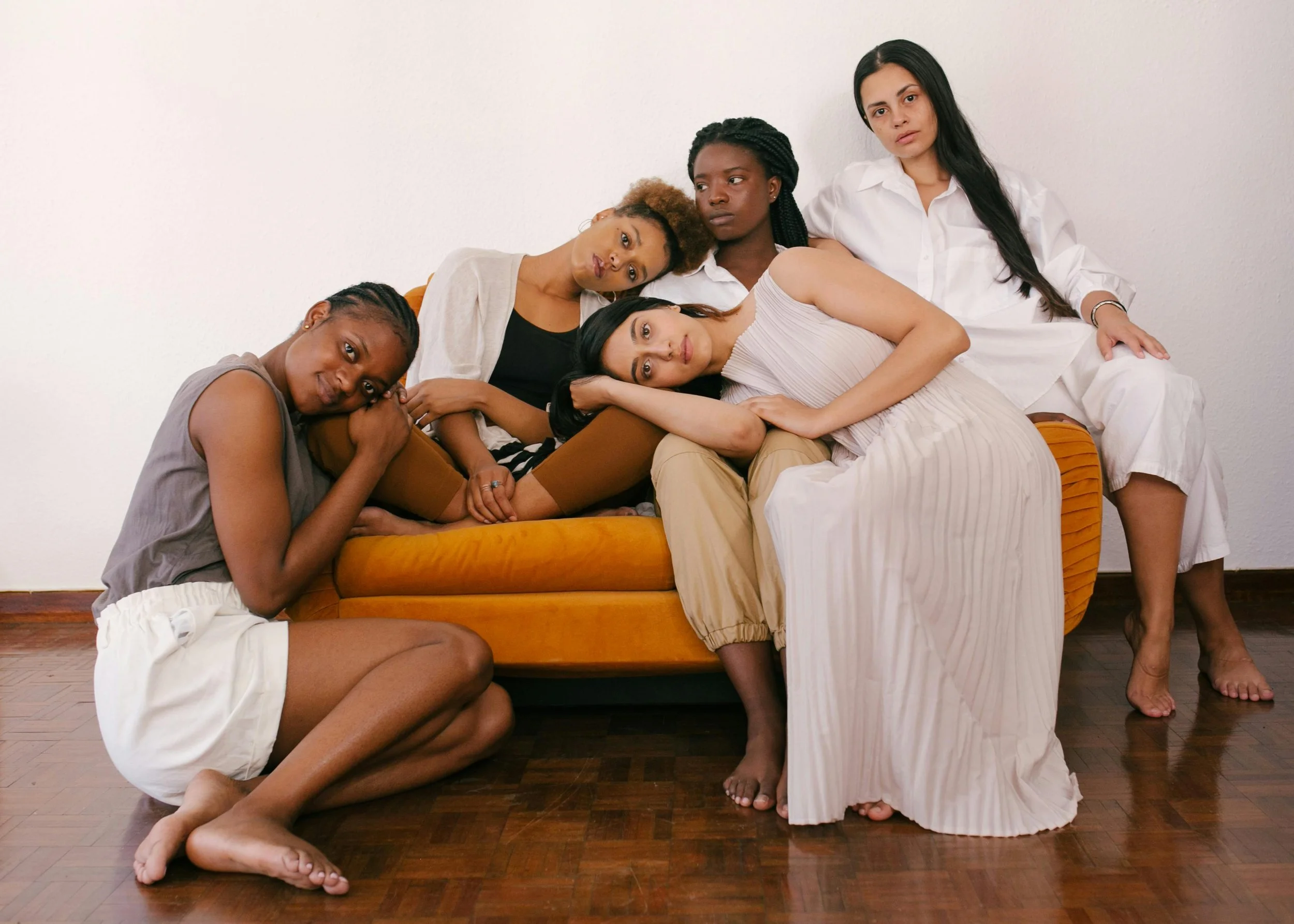
Photo by RF._.studio _: https://www.pexels.com/photo/photo-of-women-sitting-on-orange-sofa-3810832/
There is a quiet irony sitting in our wardrobes. As we approach International Women’s Day 2026, we must face a staggering truth: the very industry that defines "the feminine" is one where women still hold only two-thirds of the legal rights that men do globally.
Last year, we talked about "accelerating action," but action without a foundation of justice is just movement in a vacuum. This year, the UN’s focus on “Rights. Justice. Action.” feels deeply personal for the sustainable fashion community. Why? Because you cannot have a sustainable garment if the woman who made it is legally invisible.
In 2026, the data remains a difficult pill to swallow. Despite making up 80% of the global garment workforce [1], women are still largely excluded from the rooms where the big decisions are made. According to the 2026 FTSE Women Leaders Review, while we’ve finally hit 40% representation on boards, fewer than 10% of CEO positions are held by women [2].
Even more telling is the "creative gap." While women influence 85% of all luxury purchases, less than 40% of major womenswear brands are actually led by female creative directors [3]. We are the primary consumers and the primary makers, yet we are rarely the primary architects of the industry's future.
The Enforcement Gap
We often talk about "fair pay" as a choice brands make, but the World Bank’s 2026 report reveals the systemic rot: not a single economy in the world has secured full legal equality for women. On paper, many countries have equal rights laws, but the global score for actual enforcement is a dismal 53 out of 100 [4].
When a garment worker in a sourcing hub lacks the legal framework to report harassment or the right to own the land she lives on, "sustainability" becomes a hollow marketing term. True sustainability isn't just organic cotton; it is the legal power to demand a safe workplace.
The #GiveToGain Reciprocity
This brings us to the 2026 campaign theme: #GiveToGain. For Our Fashion Fix, this isn't about charity—it's about a superior business model. Data from early 2026 shows that women-led fashion startups consistently burn 15% less capital and generate 10% higher cumulative revenue over five years compared to their male-led counterparts [5].
When we "give" our investment to female-founded, sustainable labels, we "gain" an industry that is more resilient and more profitable.
This March 8th, our call to action is simple: Move beyond the label. Support the creators who are fighting for justice, not just aesthetic. Strike the #GiveToGain pose - hands cupped - to signal that you are ready to give your loyalty to an industry that finally gives women the rights they deserve.
References & Data Sources (2026)
[1] International Labour Organization (ILO) / Sylvan Apparel 2025-26: Global garment workforce remains ~80% female.
[2] FTSE Women Leaders Review (Feb 2026): UK boards hit 40% target, but female CEOs remain below 10%.
[3] Rawshot.ai Fashion Gender Report (2026): Less than 40% of womenswear brands at major fashion weeks are designed by women.
[4] World Bank: Women, Business and the Law 2026: Global legal enforcement score for women's rights is 53/100; only 4% of women live in countries with near-full legal equality.
[5] Theanna / PitchBook Female Founder Stats (2026): Women-led startups show 10% higher cumulative revenue over 5 years.