
Textile Exchange has raised the bar. But is your buying process ready?
Textile Exchange
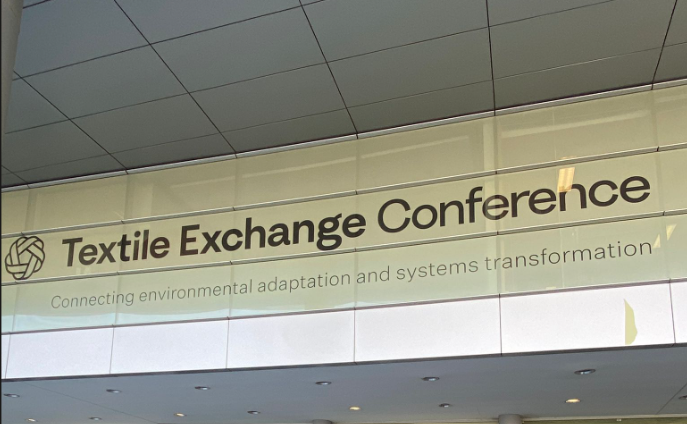
Last week’s Textile Exchange Conference in Vancouver was themed “The Implementation Era.”
Looking back over everything Textile Exchange has announced this year, the message for retailers is clear: commitments are no longer enough.
You will need to prove what you source, and the products you sign off in the coming months are the ones that will be measured.
1. Reporting and targets become mandatory in 2027.
Under Textile Exchange’s new membership model, reporting becomes mandatory for brands and retailers in 2027. Retailers in the Action Cohort must also set targets to increase the share of materials from verified preferred production systems. Verification covers areas such as pesticide and fertiliser use, deforestation, animal welfare, recycling, and human rights and livelihoods. Textile World
What retailers need to do now: Work out what you could report today, and how much of it is verified rather than self-declared. Many 2027 ranges are being built now, so sourcing decisions made this season will count towards your first targets.
2. Most retailers still can’t say where their materials come from.
Global fibre production hit a record 139 million tonnes in 2025. Among the brands and retailers reporting to Textile Exchange’s Benchmark, 79% of materials had an unknown country of origin. Resource Recycling
What retailers need to do now: Find out which product lines and suppliers have no known origin, starting with your highest-volume cotton products. You can’t set credible targets for verified materials when four-fifths of your inputs have no known origin.
3. Cotton’s impact is decided in the field.
Textile Exchange’s cotton LCA found field emissions to be the main hotspot in most systems and countries, driven largely by synthetic fertiliser. Its own conclusion is that cotton’s impact depends on where it is grown and how the field is managed. Textile Exchange
What retailers need to do now: Stop relying on country averages and generic fibre data to make sourcing decisions. Two T-shirts made from the same fibre can have very different impacts depending on the farm.
4. Standards are moving from practices to outcomes.
The Materials Matter Standard takes effect on 31 December 2026 and becomes mandatory from 31 December 2027, when certificates under the existing Textile Exchange standards will stop being renewed. It combines practice-based and outcome-based requirements. USB Certification
What retailers need to do now: Talk to your suppliers about their transition plans, and expect to be asked for measured outcomes, not just a certificate number.
5. Paperwork alone hasn’t protected cotton claims.
Organic cotton has a long history of integrity problems. Textile Exchange itself has acknowledged the gap between the organic cotton brands report using and how much is actually produced, and has said fighting fraud means going beyond certification towards real traceability. Just Style In Vancouver, Oritain made a similar point: verification that tests the material itself is needed to go beyond the documents. Sourcing Journal
What retailers need to do now: Review every sustainability claim on your cotton products and ask whether you could defend it with evidence if it were challenged.
The gap
Textile Exchange is asking retailers to report, set targets and prove outcomes. Most retailers’ systems aren’t built for that:
The evidence gap: Certificates show a product passed through a certified chain. They don’t independently prove where the cotton was grown or what impact it had in the field.
The timing gap: Impact data usually arrives after the buying decision, through LCAs that take months. By then the range is signed off and the impact is locked in.
The ownership gap: Sustainability data sits with ESG teams, while buying, merchandising, design and finance teams make the decisions. Without shared data, targets and buying decisions pull in different directions.
How we fill the gap - Our Fashion Fix & Brand Conscience
CottonConscience closes the evidence gap. Developed with support from the European Space Agency, it combines DNA tagging in the field with satellite Earth Observation. It verifies cotton from farm to finished product and measures water use, irrigation efficiency and runoff on each farm’s fields. That is the independent, field-level evidence that both the cotton LCA and the new outcome-based standards point to.
Ask Miranda closes the timing and ownership gaps. It turns that evidence into buying decisions, scoring impact at product, range and supplier level before sign-off. Buying, merchandising, design, finance and ESG teams all get a seat at the sign-off, so they can choose lower-impact products from the start rather than waiting months for an LCA. It also gives retailers the evidence to make green claims they can back up, and the data to report against their targets.
Where to start
Become a design partner with CottonConsceince - unlocking matched funding from The European Space Agency BASS. Ask Miranda — Brand Conscience
You don’t have to verify everything at once. Start with one high-volume cotton category: map its origin, verify it, and bring the impact data into your next range sign-off. That gives you a verified baseline for 2027 reporting and a model you can scale.
Textile Exchange has set the direction. Retailers who build verification into their buying now will be ready for 2027. Those who wait will still be catching up.