
France V’s Ultra-Fast Fashion
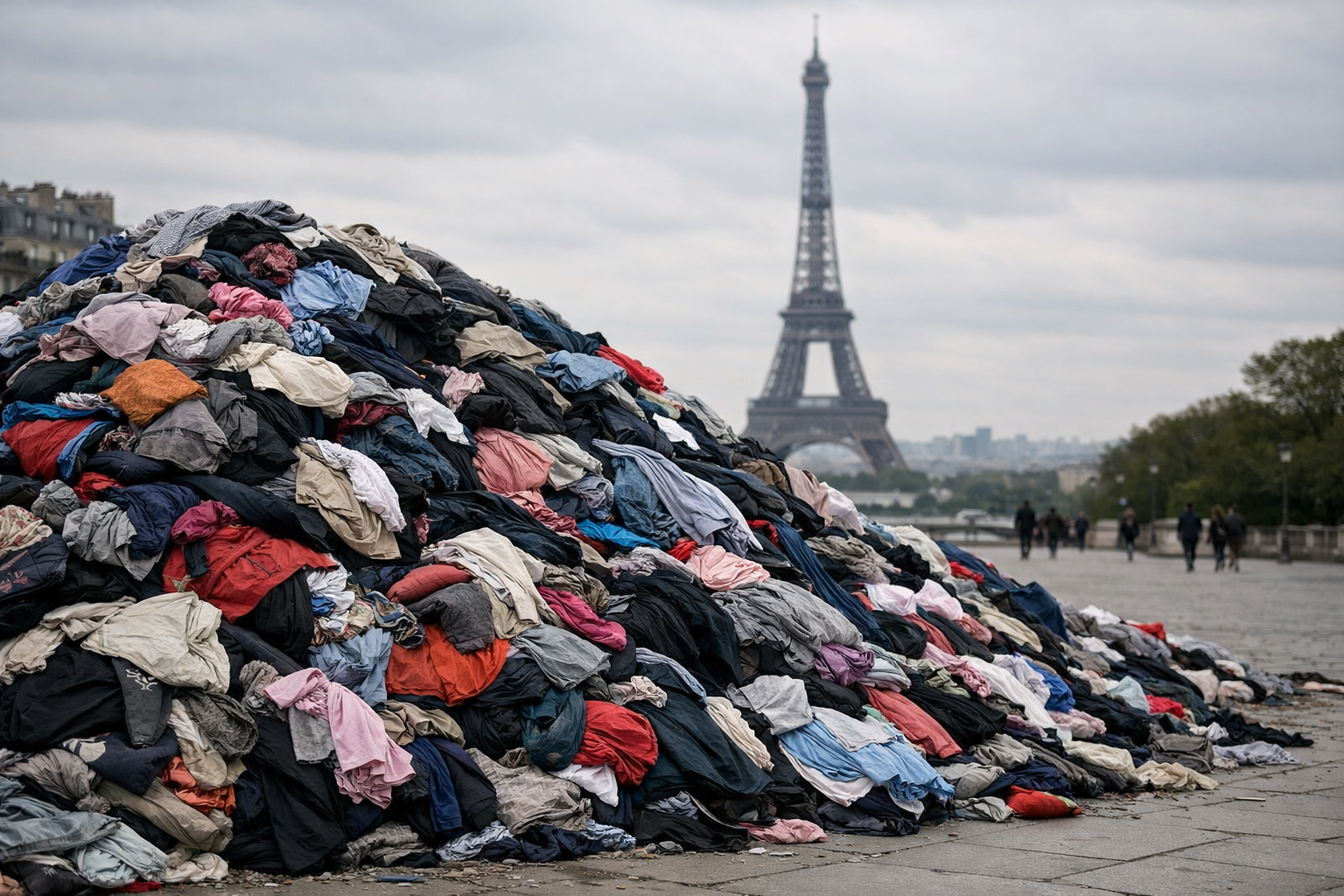
Image Ai Generated
As of 1st January 2026, France has officially implemented a legislative framework targeting the ultra-fast fashion sector, marking a transition from voluntary sustainability to a strictly regulated market.
France is now the first nation to levy substantial financial penalties and "digital blackouts" on hyper-production business models. For retailers built on the constant rotation of thousands of new styles, the French market now operates under a fundamentally different set of rules.
The Drivers of Legislative Change
This reform was not just a political gesture; it was a direct response to a production model that has outpaced environmental limits. The data behind our current consumption patterns highlights a systemic imbalance:
The Rate of Disposal: In France, an estimated 35 garments are discarded every second. Consumption has reached a peak where the average person acquires 48 items annually - a fivefold increase compared to just two decades ago.
The Carbon Impact: The textile industry is currently responsible for approximately 10% of global greenhouse gas emissions. As production volumes continue to scale, these emissions pose a direct threat to international climate targets.
The Surplus Crisis: Between 4% and 9% of all textiles placed on the EU market are destroyed before they are ever sold or worn. This results in nearly 600,000 tonnes of brand-new waste entering the waste stream annually.
Chemical Persistence: Beyond the issue of microplastics, the law specifically restricts PFAS (per- and polyfluoroalkyl substances). Often referred to as "forever chemicals," these substances are used for water resistance but are known to persist in both the human body and the environment.
The Three Pillars of the 2026 Reform
The French government is utilising three primary regulatory mechanisms to address the impact of the ultra-fast fashion industry:
1. The Advertising Ban
In a significant move to curb artificial demand, ultra-fast fashion brands are now prohibited from advertising. This "digital blackout" extends to social media influencer partnerships, effectively ending the "haul" video culture, with non-compliance carrying fines of up to €100,000.
2. The Environmental Eco-Surcharge
Under the new "polluter pays" principle, items sold by these high-volume retailers now incur a €5 eco-tax. This fee is scheduled to increase to €10 by 2030. To ensure the measure remains proportionate, the tax is capped at 50% of the item’s retail price, ensuring that the penalty is tied directly to the garment's value.
3. Mandatory Transparency: The Eco-Score
Products must now display a "Coût Environnemental" (Environmental Cost) label. Similar to a nutritional grade, this system ranks garments based on 16 indicators including durability, recyclability, and carbon footprint - providing consumers with critical data at the point of sale.
By increasing the cost of disposable clothing and reducing its visibility, France is attempting to shift the cultural mindset back toward quality and longevity. The revenue generated from these surcharges is intended to be reinvested into the sustainable French textile sector, supporting a more circular economy.
The global community is watching closely. If successful, this framework may serve as the blueprint for an EU-wide standard, effectively removing the "competitive advantage" previously held by those who externalised their environmental costs.
What do you think of these new measures? Would you be willing to pay a €5 "guilt tax" on a cheap top if it meant funding a more sustainable future, or would you think twice about making the purchase?